




Introduction: The Intersection of Art and Food
Over the past decade, an exciting new frontier has emerged in the world of art, design, and culinary innovation: the fusion of art and food. Edible art—a creative blend of aesthetic expression and culinary craftsmanship—is making its way into prominent cultural institutions and global events such as museums, fashion shows, and design festivals. What was once the sole domain of chefs and culinary artists has evolved into a dynamic and multi-disciplinary movement that engages all the senses, transforming food into a medium for art.
This article delves into the phenomenon of edible art, exploring how global art museums, fashion events, and design festivals have embraced this innovative collaboration. We will explore how food has become more than just a means of nourishment; it is now an integral part of cultural storytelling, offering a platform for challenging perceptions, celebrating creativity, and engaging in conversations about sustainability, identity, and sensory experiences.
Section 1: The Rise of Edible Art: Defining the Intersection of Food and Creativity
What is Edible Art?
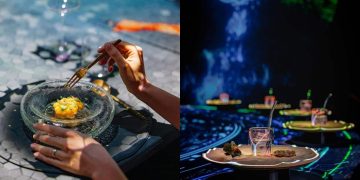
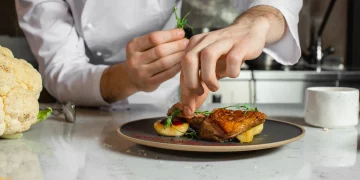
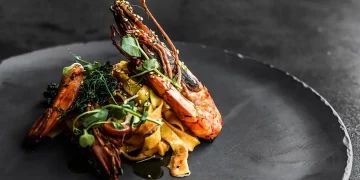
Edible art refers to any creative work or installation in which food plays a central role in the artistic expression. Unlike traditional food preparations that prioritize taste and nourishment, edible art aims to merge aesthetics with gastronomy, turning food into a visually compelling and conceptually intriguing medium. These creations can range from edible sculptures and interactive food installations to conceptual culinary designs that challenge the boundaries of art, culture, and the human experience.
The practice of edible art is not only confined to chefs or food designers—it has become a collaborative expression involving artists, designers, fashion icons, and architects who approach food as an aesthetic material, just as they would paint, metal, or fabric.
Historical Context and Cultural Significance
The concept of food as art has existed for centuries. In ancient times, royal banquets and feasts often showcased food in intricate and artistic displays. However, the modern movement of edible art gained real momentum in the 21st century, when avant-garde chefs and artists began using food to express complex cultural and artistic ideas.
For example, the Renaissance period witnessed elaborate table displays during courtly feasts, where food was sculpted and arranged to serve as a visual spectacle. In the modern era, the rise of the molecular gastronomy movement in the 1990s further blurred the lines between food, science, and art, pushing the boundaries of how food could be deconstructed, transformed, and reinterpreted.
By the early 2000s, conceptual chefs like René Redzepi (Noma), Grant Achatz (Alinea), and Ferrán Adrià (El Bulli) were pushing the boundaries of culinary innovation, incorporating visual, sensory, and even philosophical elements into their creations. At the same time, visual artists began experimenting with food as a medium, leading to the collaborative culture of art and food that is so prominent today.
Section 2: Art and Food at Global Museums and Exhibitions
Museums Embrace the Intersection of Culinary Arts and Fine Arts
Over the past decade, a growing number of museums have begun to embrace food as an art form, incorporating food-based exhibitions and interactive installations into their programming. These exhibitions not only showcase the aesthetic and cultural significance of food but also invite visitors to engage in a sensory experience that transcends traditional art forms.
- The Museum of Modern Art (MoMA) – New York City
One of the pioneers of integrating food and art, MoMA has hosted several exhibitions where food plays a central role. In 2009, MoMA presented the groundbreaking exhibition, “The Edible Art: A Culinary Exploration of Modernism”, which featured edible sculptures, cakes, and conceptual culinary pieces inspired by modern art movements. The exhibition included cake designs based on iconic paintings, like those by Pablo Picasso and Andy Warhol, offering a sensory immersion into the world of contemporary visual and culinary art. - The Tate Modern – London
At Tate Modern, food has also been featured as part of several performance art pieces and installations. The most notable example was “Edible: A Performance Art Project”, a live installation that invited visitors to interact with artists who created art pieces using fruit, vegetables, and edible paints. The performance art installation blurred the line between art-making and dining, allowing the audience to participate by tasting the creations or witnessing the process of food as transient art. - The Smithsonian Institution – Washington, D.C.
The Smithsonian’s National Museum of American History has hosted exhibitions like “The Art of American Food”, which explored the cultural significance of food in America’s historical context. The museum showcased iconic food-related works of art, including edible paintings, desserts inspired by famous artworks, and interactive installations where visitors could create their own edible art.
International Art and Food Festivals
Global art festivals have also embraced the inclusion of edible art, not just as a novelty, but as a significant cultural expression. Some examples include:
- The Venice Biennale – Italy
The Venice Biennale, one of the most prestigious cultural events in the world, featured food-based art installations at its Art Exhibition. In recent years, artists have presented edible sculptures, food-based performance pieces, and even interactive dining experiences that encourage viewers to engage in food as both artistic and social discourse. - Art Basel – Miami, Switzerland, and Hong Kong
Art Basel, known for its high-profile art exhibitions, has also seen collaborations between chefs and artists. Chef Massimo Bottura, known for his experimental cuisine, participated in Art Basel with a project called “Cooking as Art”, where he collaborated with visual artists to create edible art installations that engage visitors in the concept of food as an experience, both visual and taste-based.
Section 3: Food in Fashion Shows: The Role of Edible Art in Haute Couture
The Growing Trend of Edible Art in Fashion
Fashion shows have long been a platform for creativity, innovation, and the merging of various artistic disciplines. Recently, the fusion of food and fashion has become a natural evolution, as both industries embrace sustainability, luxury craftsmanship, and sensory design. Food has been used in fashion shows and launch events to create memorable, immersive experiences that challenge the traditional boundaries of both fashion and dining.
- Dior’s Edible Fashion
In 2019, Christian Dior launched a collaboration with chef Jean Imbert to create an edible couture collection at their fashion show. The collection featured sugar sculptures inspired by the brand’s designs, offering guests not just a visual spectacle but an edible experience that was integrated into the runway show. Guests were invited to interact with the pieces, consuming the edible art as part of the fashion experience. - Alexander McQueen: Fashion Meets Gastronomy
The late Alexander McQueen was known for incorporating elaborate food-based concepts into his runway shows. In his Autumn/Winter 2001 collection, models walked a runway set against a backdrop of edible art installations, where the food was intricately crafted to reflect the themes of the collection. McQueen’s work was an early example of how food can be used in fashion to push the boundaries of creativity. - Sustainable Food in Fashion
Many designers are also using food to advocate for sustainability and ethical eating in their shows. For instance, Stella McCartney, known for her environmentally conscious fashion, collaborated with food activists to create an edible collection using plant-based ingredients and sustainable materials that align with her eco-friendly ethos. Her shows showcased fashion pieces that were not only made with sustainable fabrics but also with edible materials, underscoring the symbiotic relationship between fashion and food sustainability.
Section 4: Design Festivals and Edible Art Installations
The Role of Design Festivals in Promoting Edible Art
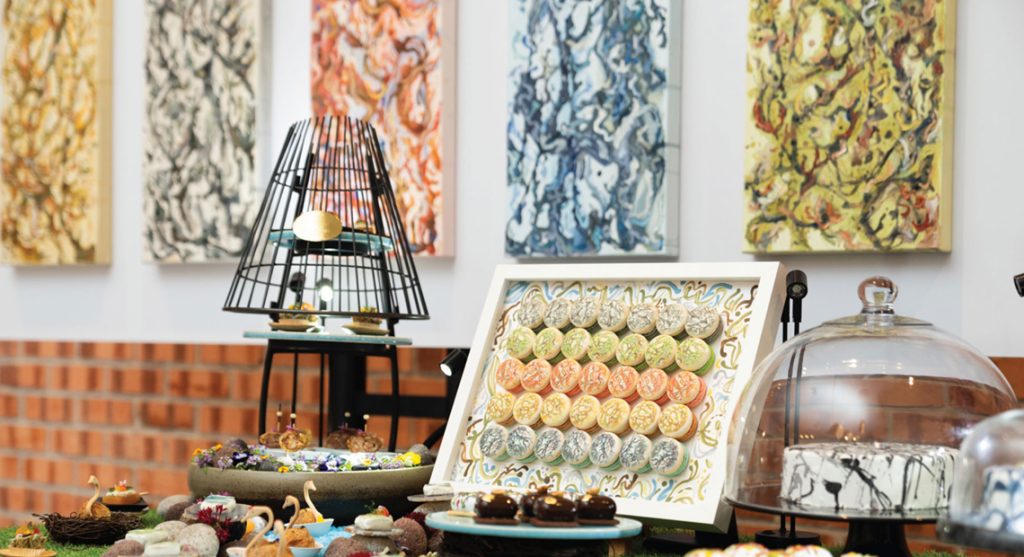
Design festivals around the world have become important platforms for showcasing edible art, where food is integrated into large-scale installations, performances, and collaborative projects. These festivals emphasize the creative, sensory, and conceptual aspects of food as an art form, bridging the worlds of design, gastronomy, and visual art.
- Salone del Mobile – Milan, Italy
One of the largest and most influential design events in the world, Salone del Mobile in Milan, has hosted food-related design installations that challenge perceptions of both design and cuisine. In 2017, the festival featured a groundbreaking edible architecture exhibition, where chefs and architects worked together to create intricate, edible structures that could be eaten, destroyed, and reinterpreted as part of a dynamic art experience. - The London Design Festival – UK
The London Design Festival has featured numerous installations where food design is used to create memorable interactive experiences. Food art has been integrated into projects exploring themes of sustainability, food security, and the future of gastronomy. Designers and chefs alike have created edible sculptures, interactive food displays, and immersive dining experiences that encourage the audience to rethink their relationship with food.
Conclusion: The Future of Edible Art
The integration of food into art, fashion, and design is only set to grow as both chefs and artists continue to experiment with creative expression in the culinary world. As edible art continues to infiltrate museums, fashion shows, and design festivals, the boundaries between art, design, and dining are increasingly blurred, offering new opportunities for collaboration, sustainability, and cultural dialogue.
In this exciting era of food as art, we are not just invited to see and taste—we are encouraged to experience food in all its forms, from the conceptual to the edible, and to recognize its power to challenge conventions, spark conversation, and inspire creativity across diverse artistic domains.