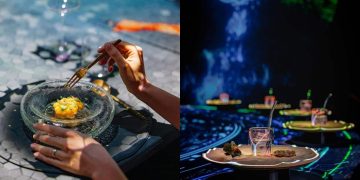










Introduction: A New Era of Dining Beyond Taste
In the modern age of gastronomy, dining is no longer just about the food—it has become a multi-sensory experience. The concept of immersive dining is pushing the boundaries of traditional restaurants, combining music, lighting, visuals, and scents to create a truly holistic experience that engages all five senses of the diner. It’s a form of artistic expression that integrates culinary craftsmanship with elements of theater, technology, and design, offering guests an emotional, immersive journey that goes far beyond the plate.
In an immersive dining experience, every element of the environment is carefully curated to evoke emotions, enhance the dining experience, and tell a story. From the moment guests enter the venue to the last bite of their meal, every detail is designed to influence the mood, trigger memories, and amplify the flavors they experience. This approach turns the act of dining into a sensory exploration, where taste is just one part of the story.
This article explores the rise of immersive dining, the elements that make up a multi-sensory experience, and the ways in which restaurants and chefs are revolutionizing the way we eat, turning meals into unforgettable artistic experiences.
Section 1: What Is Immersive Dining?
Defining Immersive Dining
Immersive dining is an experiential form of dining that combines food with artistic and sensory elements such as lighting, sound, visuals, and scents to create a fully engaging atmosphere. Rather than simply serving food in a traditional manner, immersive dining aims to evoke emotions, stimulate the senses, and immerse guests in an atmosphere that elevates the experience of eating into a multi-dimensional sensory journey.
Key elements of immersive dining include:
- Lighting: Dynamic, changing light patterns that influence the mood, enhance flavors, and create an emotional atmosphere.
- Music & Sound: Carefully curated playlists or soundscapes that complement the meal, enhance the ambiance, and evoke emotional responses.
- Visuals: Interactive projections, art installations, or themed designs that create a unique visual environment around the guests.
- Scents: The use of aroma to trigger memories, enhance taste, and heighten the sensory experience.
- Narrative: Many immersive dining experiences are designed around a particular theme or story, making the meal feel like an ongoing narrative or performance.
The goal of immersive dining is not just to serve food but to transport diners into a different world—a world where food is experienced through sight, sound, touch, and smell. It aims to create an emotional connection, turning an ordinary meal into something extraordinary.
Origins and Evolution of Immersive Dining
The roots of immersive dining can be traced back to the world of theater and art installations, where sensory environments were used to provoke deep emotional responses. Over the years, this concept has made its way into the culinary world, thanks to the work of innovative chefs and restaurant designers who saw the potential of combining food with other sensory experiences.
Early examples of immersive dining can be seen in the molecular gastronomy movement, where chefs began experimenting with unusual textures, flavors, and presentations that defied traditional dining norms. This led to the emergence of conceptual restaurants where meals were served in theatrical settings, often incorporating music, projections, and lighting to complement the dishes.
However, the true explosion of immersive dining as we know it today can be attributed to several avant-garde dining experiences that began appearing around the world in the late 2000s and 2010s. These restaurants broke away from traditional dining concepts, creating experiences that were as much about the atmosphere as the food itself. Immersive dining has since become an industry trend, with a growing number of restaurants and pop-up dining events around the world embracing this new way of experiencing food.
Section 2: The Elements of Immersive Dining
1. Lighting: Shaping Mood and Flavor
Lighting is one of the most important elements in creating an immersive dining experience. Different types of lighting can have a profound effect on the atmosphere of a restaurant, influencing the diners’ mood, perceptions, and even the way they experience flavors.
- Ambient Lighting: Soft, diffused light creates a relaxing, intimate atmosphere. It’s often used in restaurants to encourage relaxation and conversation.
- Accent Lighting: This type of lighting draws attention to specific areas of the restaurant or certain elements of the dining experience, such as the presentation of a dish.
- Dynamic Lighting: Some immersive dining experiences use changing lights to reflect the different phases of the meal or to enhance the emotional tone of the experience. For example, a dramatic shift in lighting might coincide with the introduction of a particularly rich or complex dish, amplifying the guest’s sensory reaction.
- Color Temperature: Different colors of light—such as warm yellow tones versus cooler blue tones—can evoke different emotions and affect our perception of taste. For instance, warm lighting might make food seem more comforting, while cool lighting can give a more modern, clean feel to the meal.
By playing with lighting, restaurants are able to create an atmosphere that enhances the emotions tied to the food. As light changes in intensity or color, it can help amplify the flavors or the visual appeal of the dishes served.
2. Music & Sound: Enhancing the Sensory Experience
Music and sound play a critical role in immersive dining, not only in shaping the mood but also in altering taste perceptions. Studies have shown that sound can influence how we perceive food flavors. For example, high-pitched sounds might make food taste sweeter, while low-pitched sounds might make it taste more savory or earthy.
- Curated Playlists: Many immersive dining experiences use music playlists carefully designed to match the mood of the meal. A romantic dinner might feature soft classical music or jazz, while a more energetic, modern meal might feature upbeat electronic or experimental music.
- Soundscapes: Instead of or in addition to music, some immersive dining experiences use soundscapes—ambient, non-melodic sound environments that might mimic nature, urban life, or fantastical settings. For instance, a seafood dish might be accompanied by the sound of ocean waves, while a forest-themed meal could feature birdsong or rustling leaves.
Music can also trigger emotions and memories, influencing diners’ perceptions of the meal. In many cases, the auditory experience is synchronized with the meal’s stages, creating a temporal narrative that enhances the dining experience.
3. Visuals: Immersive Projections and Thematic Design
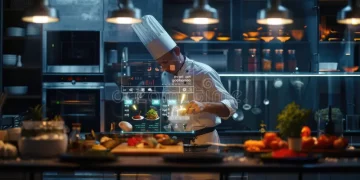
The visual aspect of immersive dining is often the most striking and noticeable element. Through projections, art installations, and even augmented reality, diners are transported into another world that complements the culinary experience.
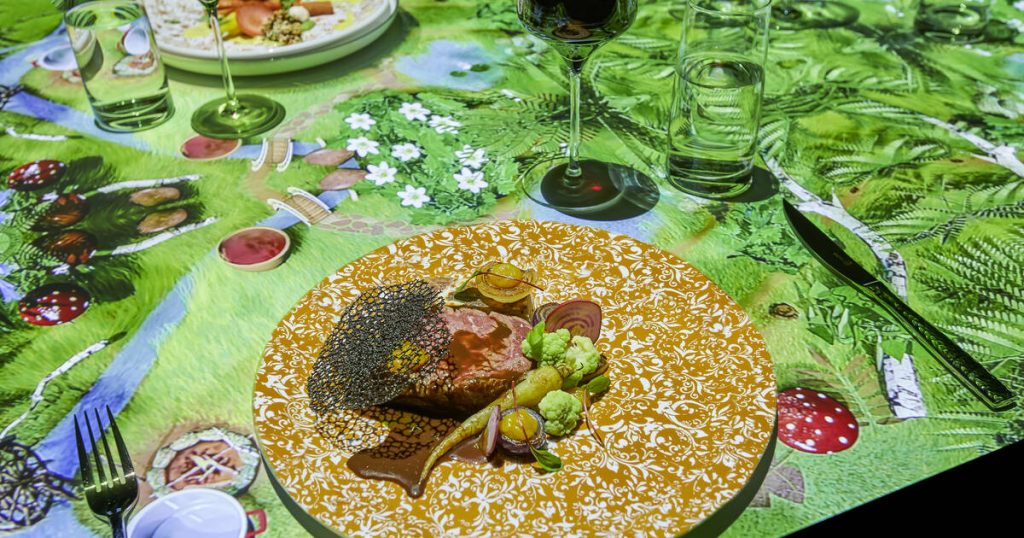
- Projection Mapping: This technology allows restaurants to project dynamic visuals onto surfaces—such as tables, walls, or even the food itself. In some immersive dining experiences, projections change throughout the meal, telling a story or reflecting the mood of each dish.
- Thematic Environments: Restaurants might design their interior spaces with a specific theme in mind, using art, design, and architecture to visually complement the culinary journey. For example, a meal based on the seasons might take diners through a space that gradually changes from spring to summer to fall to winter, visually reinforcing the flavors they experience with each course.
- Interactive Elements: Some immersive dining experiences invite diners to participate in the creation of the visual aspect of their meal, allowing them to customize projections or interact with digital artwork in real time.
By combining food with visually stunning elements, immersive dining creates a memorable experience that goes beyond the ordinary. These experiences engage diners’ imaginations, turning the meal into a sensory journey that tells a story.
4. Scents: The Power of Aroma
Aromas have an immediate and powerful effect on our senses. Smell is closely linked to taste, and when combined with other sensory inputs like sound and light, it can dramatically enhance the dining experience.
- Scents to Complement Flavors: Many immersive dining experiences use scent to enhance the flavors of the dishes being served. For instance, diners might smell fresh herbs, spices, or even earthy forest scents while eating a dish that features those same flavors, creating a stronger connection between smell and taste.
- Scented Environments: In some dining experiences, restaurants will use ambient scents to create a specific atmosphere or theme. For instance, a forest-themed meal might include smells of pine or damp earth, while a tropical meal could feature the aroma of coconut, sea breeze, and exotic fruits.
Scent is a powerful trigger for memories and emotions, and its ability to enhance the overall meal experience has made it an essential part of immersive dining.
Section 3: The Impact of Immersive Dining on the Culinary World
Revolutionizing the Restaurant Industry
Immersive dining is reshaping the restaurant industry by encouraging restaurants to experiment and innovate beyond the traditional dining experience. This form of dining not only attracts food lovers but also those with a passion for art, design, and technology. It has become a new form of culinary entertainment, where dining is no longer just about sustenance but about artistic expression.
Chefs and restaurateurs are now exploring the intersection of food and technology, integrating multi-sensory environments into their menus to create unique experiences. The goal is not just to satisfy hunger, but to engage guests on an emotional level, to make them feel something—whether that be wonder, nostalgia, excitement, or relaxation.
Creating Unforgettable Experiences
The most successful immersive dining experiences are those that create lasting memories. By engaging all of the senses, these meals become unforgettable events, not just in terms of food but in terms of atmosphere, story, and emotion. These experiences often leave diners talking about their meal long after the last bite, making immersive dining an experience-driven industry.
Conclusion: Immersive Dining—The Future of Culinary Art
Immersive dining is pushing the boundaries of what food can be. It has evolved from a simple meal into a multi-sensory spectacle, where each bite is enhanced by sight, sound, light, and scent. By combining art, technology, and gastronomy, immersive dining is offering guests an unparalleled dining experience that taps into their emotions, imagination, and senses.
As this trend continues to grow, immersive dining is poised to become a key part of the future of the restaurant industry—an industry where dining is no longer just about taste, but about experiencing food as an art form. Whether it’s through dynamic lighting, innovative visuals, curated soundtracks, or unforgettable aromas, immersive dining is creating unforgettable journeys that engage and captivate the diner’s senses in new and exciting ways.