




Introduction: The Magic of Loy Krathong
One of Thailand’s most captivating cultural traditions is the Loy Krathong Festival, also known as the Thai Lantern Festival. Celebrated annually on the full moon night of the 12th month in the traditional Thai lunar calendar (usually in November), Loy Krathong is a festival that blends spiritual meaning, visual beauty, and cultural significance. The name Loy Krathong translates to “to float a krathong,” with the krathong being a small, often elaborately decorated boat made of banana leaves, flowers, and candles, which is set afloat on bodies of water.
Loy Krathong is a festival that symbolizes the release of one’s sins and bad luck while paying homage to the water goddess, Phra Mae Khongkha, for her benevolence in providing water for agriculture, transportation, and daily life. It is a night of reflection, gratitude, and celebration, where people come together to honor their ancestors, seek forgiveness, and make wishes for the future. This article delves into the cultural, historical, and spiritual significance of the Loy Krathong Festival, exploring its rituals, regional variations, and the growing global recognition of this stunning celebration of light and water.
The History of Loy Krathong
Origins and Legends
The exact origins of the Loy Krathong Festival are shrouded in mystery, with various theories and legends vying for attention. Some believe the festival dates back more than a thousand years, rooted in the ancient tradition of paying respect to the river goddess for the vital role water plays in the agricultural cycle. The festival, in its earliest form, may have been an offering to the goddess of water, representing a way to honor her and seek her blessings.
One widely accepted theory is that Loy Krathong has ties to an ancient Indian tradition of worshiping the goddess Ganga. As India’s Ganga (the Ganges River) is considered sacred, the practice of floating offerings on water may have been adapted by the Thai people, with local modifications and beliefs.
However, another compelling story links the festival to the legend of Phra Mae Khongkha, the water goddess in Thai folklore. According to the legend, the goddess once became angry at humans for polluting the rivers, so she flooded the lands in punishment. To appease her, people began to float offerings in rivers to express their apologies and seek her forgiveness. This act of floating krathongs, symbolizing the release of negative energy and bad luck, has become the central theme of the festival.
The festival was also thought to have been influenced by the ancient tradition of the Yi Peng festival in Northern Thailand, which involved the release of lanterns into the sky to honor Buddha. Over time, the rituals evolved, merging both terrestrial and celestial offerings of light.
The Rituals and Symbols of Loy Krathong
Krathong: The Heart of the Festival
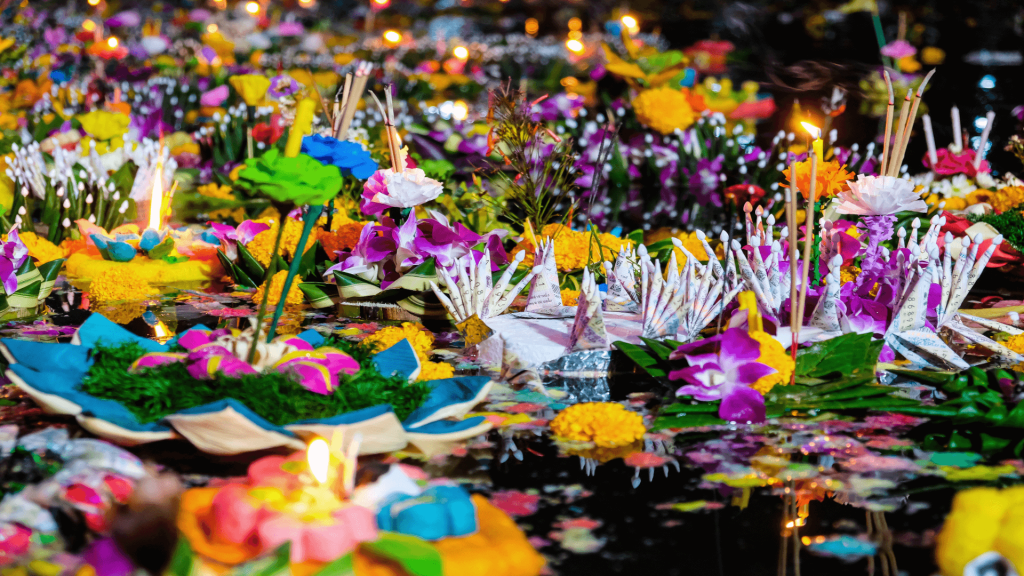
The central element of Loy Krathong is the krathong itself, a floating vessel typically made from banana leaves, adorned with flowers, candles, and incense. The krathong symbolizes the act of releasing bad luck and sins into the river and is also a symbol of gratitude to the water goddess. The krathong is carefully crafted, often by families or individuals, with great attention to detail, and is traditionally floated in rivers, canals, or ponds.
The krathong can be of different shapes and sizes, depending on regional customs and personal preferences. In many cases, the krathong is circular, symbolizing the cycle of life, death, and rebirth. The candles and incense represent light and purity, while the flowers, particularly marigolds, are seen as offerings of beauty and respect.
When the krathong is set afloat on the water, it is often accompanied by wishes and prayers for prosperity, love, and good fortune. Some people also place a lock of hair or a nail clipping in the krathong as a personal symbol of releasing past misfortunes. As the krathongs float away, it is believed that the bad luck of the person who set it afloat will be carried away with it.
The Release of Sky Lanterns (Yi Peng)
In northern Thailand, particularly in Chiang Mai, Loy Krathong is also celebrated alongside the Yi Peng Festival, where thousands of paper lanterns (known as khom loi) are released into the sky. These lanterns, illuminated by candles inside, create a mesmerizing visual spectacle as they float upwards, symbolizing the release of personal burdens, desires, and regrets.
The tradition of sky lanterns is thought to have originated from the belief that the floating lanterns would carry away misfortune and bad luck, while offering prayers for good fortune in the coming year. The lanterns are often inscribed with messages, names, or wishes, adding a deeply personal and spiritual element to the celebration. As the lanterns rise into the night sky, they create a breathtaking sight that has become one of the most iconic images of Loy Krathong.
The simultaneous release of thousands of lanterns is an awe-inspiring experience, evoking feelings of connection and collective hope. While both the floating of krathongs and the releasing of lanterns are part of the broader celebration of Loy Krathong, the sky lanterns are most closely associated with the Yi Peng Festival, which is particularly significant in Chiang Mai and other northern regions of Thailand.
Loy Krathong as a Time for Reflection and Gratitude
Paying Respect to Water
At its heart, Loy Krathong is a festival of gratitude and respect for the water goddess, Phra Mae Khongkha, who is believed to govern the waters that nourish the land and sustain life. Water is a vital resource in Thailand, and the festival serves as an opportunity to honor the rivers, canals, and lakes that have supported agriculture, trade, and daily life for centuries.
As Thais set their krathongs afloat on the water, they are not only symbolically releasing their past misfortunes but also paying homage to the life-giving forces of nature. The flowing water, carrying away the krathongs, becomes a symbol of purification, cleansing the past and making way for new beginnings. It is a deeply spiritual act, rooted in the belief that connecting with the natural world, and especially water, can help restore balance and harmony.
The Festival of Love and Romance
In addition to its spiritual significance, Loy Krathong is also a celebration of love and romance. Traditionally, couples will float krathongs together, symbolizing their love and the hope that their relationship will remain strong and enduring. The act of floating a krathong is seen as a way of releasing conflicts and miscommunication, allowing love to flourish. Many couples will make a wish for a prosperous relationship, and the success of their krathong’s journey downstream is often seen as a sign of the strength of their bond.
For singles, Loy Krathong is an opportunity to seek love. Some young women will float their krathongs with a prayer for a good marriage, while others hope for luck in finding a partner. The festival’s romantic undertones make it a popular occasion for lovers and couples to gather, but it is equally cherished by individuals seeking love, happiness, and new beginnings.
Regional Variations of Loy Krathong
Bangkok and Central Thailand
In Bangkok, Loy Krathong is celebrated with grand parades, vibrant performances, and large public gatherings along the Chao Phraya River. The city’s major riverside temples, including Wat Arun and Wat Phra Kaew, host festivities, where people gather to float their krathongs, watch fireworks displays, and enjoy traditional Thai dance and music. Many local businesses also participate by hosting riverfront dinners and celebrations, making it a festive and social occasion.
Chiang Mai and Northern Thailand
In Chiang Mai, the combination of Loy Krathong and the Yi Peng Festival creates a truly magical atmosphere. The streets are filled with lanterns, and the sky above is dotted with thousands of glowing khom loi lanterns, which are released in unison during the night. The release of these lanterns is a breathtaking sight, attracting tourists and locals alike. In addition to the sky lanterns, the Krathongs are floated along the Ping River, creating a beautiful and serene scene that captures the essence of the festival.
Southern Thailand
In the southern regions of Thailand, including Phuket and Krabi, Loy Krathong is celebrated with a focus on the ocean and the seafaring traditions of the region. In coastal areas, people often float krathongs on the sea instead of rivers, paying tribute to the water gods who sustain the marine environment.
The Modern Evolution of Loy Krathong
Global Recognition and Tourism
In recent years, the Loy Krathong Festival has gained significant international attention, with tourists from around the world flocking to Thailand to witness and participate in this stunning celebration of light, water, and culture. As a result, Loy Krathong has become a major event in the Thai tourism calendar, with hotels, restaurants, and travel agencies offering special packages for visitors seeking to experience the magic of the festival.
Despite its growing popularity among tourists, the core values and traditions of Loy Krathong remain intact. Efforts have been made to preserve the cultural and spiritual significance of the festival, while ensuring that visitors can appreciate its beauty and meaning in a respectful way.
Conclusion: The Eternal Spirit of Loy Krathong
Loy Krathong is more than just a festival; it is a celebration of life, nature, and spiritual renewal. As people across Thailand gather to float their krathongs and release sky lanterns into the night, they participate in a tradition that transcends time and connects them to their cultural heritage and the natural world. Through its symbolism of purification, reflection, and gratitude, Loy Krathong offers a powerful reminder of the importance of harmony with nature, the cleansing of past mistakes, and the hope for a brighter, more prosperous future.
As the festival continues to evolve and captivate audiences both in Thailand and around the world, it remains a testament to the enduring power of tradition, the beauty of human connection, and the ever-present magic of light, water, and culture.