









Culinary tourism is an ever-growing trend that reflects the increasing interest travelers have in experiencing a destination’s unique food culture. Among the most celebrated destinations for food lovers are Provence, in the south of France, and Oaxaca, in southern Mexico. These regions have long attracted global attention for their distinct and vibrant food traditions, rooted in both history and local ingredients. Provence, with its Mediterranean influences and French culinary artistry, offers an array of dishes that embody the region’s sun-drenched landscapes, fresh produce, and seafood. Meanwhile, Oaxaca, often called the gastronomic capital of Mexico, is a place where indigenous traditions, complex flavors, and centuries-old cooking techniques come together to create an unforgettable culinary experience.
In this article, we will explore the food cultures of these two extraordinary regions, examining their historical roots, signature dishes, and the ways in which food serves as a lens through which to understand each area’s cultural identity. We will also look at how both regions have become magnets for food tourism, drawing visitors from around the world who are eager to taste their unique dishes and experience their vibrant food traditions.
Provence: A Feast for the Senses
Located in southeastern France, Provence is a region that embodies the essence of Mediterranean living. Known for its stunning landscapes of lavender fields, olive groves, vineyards, and the shimmering coastline of the French Riviera, Provence offers a rich culinary tapestry that is deeply connected to its environment. The region’s cuisine is shaped by a mild climate, abundant sun, and fertile soil, which together create the perfect conditions for growing a wide variety of fruits, vegetables, and herbs.
The Influence of Geography and Climate
The food of Provence is largely Mediterranean in character, focusing on fresh, seasonal produce, aromatic herbs, and high-quality olive oil. The Mediterranean diet is known for its health benefits, and the Provencal diet is no exception. Olive oil, garlic, tomatoes, herbs like thyme, rosemary, and basil, and fish from the Mediterranean Sea all play a prominent role in the region’s culinary landscape.
Provence is home to some of France’s most iconic dishes, many of which are based on simple, yet flavorful combinations of locally grown ingredients. The region’s cuisine is designed to reflect its agricultural wealth, with dishes often featuring fresh vegetables like tomatoes, eggplant, zucchini, and bell peppers, which thrive in the warm climate.
Signature Dishes of Provence
- Bouillabaisse: This famous fish stew originated in the port city of Marseille and is one of Provence’s most iconic dishes. Bouillabaisse is made with a variety of fish, shellfish, and herbs, all simmered in a rich broth and served with a side of rouille, a garlicky mayonnaise sauce. The dish is a celebration of Provence’s coastal bounty and is traditionally served as a communal meal, showcasing the region’s maritime heritage.
- Ratatouille: A quintessential dish of southern France, ratatouille is a vegetable medley made with eggplant, zucchini, tomatoes, onions, and peppers, all slow-cooked with olive oil and herbs. It is the perfect representation of Provence’s reliance on fresh, local produce, and can be served as a side dish or a main course. Ratatouille is often eaten during the summer months, when the vegetables are at their peak.
- Tapenade: An appetizer or spread made from olives, capers, garlic, and olive oil, tapenade is a staple in Provence. It’s typically served with crusty bread or as a condiment for grilled meats. The dish reflects Provence’s love for olives, and it perfectly encapsulates the region’s emphasis on simple yet robust flavors.
- Pissaladière: This Provencal version of pizza is made with a thick dough topped with caramelized onions, anchovies, and olives. The dish is most closely associated with Nice, a city on the Mediterranean coast, and it showcases the region’s love of bold, savory flavors.
- Herbes de Provence: This blend of dried herbs (including rosemary, thyme, oregano, and lavender) is used to season many of the region’s dishes. The aromatic mix is often used in meat dishes, stews, and vegetables, and it serves as a signature flavor profile of Provencal cooking.
Provence’s Wine and Olive Oil
The wines of Provence are as varied and diverse as its cuisine. The region is particularly renowned for its rosé wines, which are made primarily from Grenache, Syrah, and Cinsault grapes. Provence’s rosé wines are light, crisp, and perfect for pairing with the fresh, herb-infused dishes the region is known for. The region also produces red and white wines, with regions like Bandol and Châteauneuf-du-Pape offering some of the best examples of Mediterranean wine production.
Equally important in Provencal cuisine is olive oil, which is used in abundance in both cooking and dressings. Provence has a long history of olive cultivation, and its olive oil is known for its fruity, robust flavor. Local olive oil producers offer tastings and tours, giving visitors the chance to learn about the oil-making process and the different varieties of olives grown in the region.
Oaxaca: A World of Complex Flavors
Oaxaca, located in the southern part of Mexico, is a region rich in culture, history, and culinary diversity. Known as the “land of the seven moles,” Oaxaca’s food culture is a reflection of its complex indigenous heritage, as well as the fusion of Spanish and African influences. The region is home to an array of ingredients, techniques, and flavors that set it apart from other Mexican culinary traditions. Oaxaca has become a major culinary destination, attracting food lovers who want to explore the flavors that have made it one of Mexico’s gastronomic capitals.
Oaxaca’s Indigenous Culinary Roots
Oaxaca’s food culture is deeply rooted in the traditions of its indigenous people, particularly the Zapotec and Mixtec cultures. The region’s cuisine makes use of native ingredients like corn, chiles, beans, squash, tomatoes, and amaranth. Corn, in particular, is a key ingredient in Oaxaca’s culinary traditions, and it is often ground into masa (dough) to make tortillas, tamales, and other dishes.
The complexity of Oaxacan cuisine is reflected in its use of chiles, which are often roasted and ground to create rich, smoky sauces and moles. Oaxacan cuisine also features the extensive use of moles—a type of sauce made with chiles, nuts, seeds, and spices. Each mole has its own distinctive flavor profile and is often served with meats like chicken, turkey, or pork.
Signature Dishes of Oaxaca
- Mole: Oaxaca is perhaps most famous for its moles—thick, rich sauces made from a blend of ingredients such as dried chiles, chocolate, cinnamon, almonds, and spices. The region’s most famous moles include mole negro, mole rojo, mole verde, and mole amarillo, each with its own unique combination of flavors. These moles are typically served over chicken or turkey and are a centerpiece of Oaxacan cuisine.
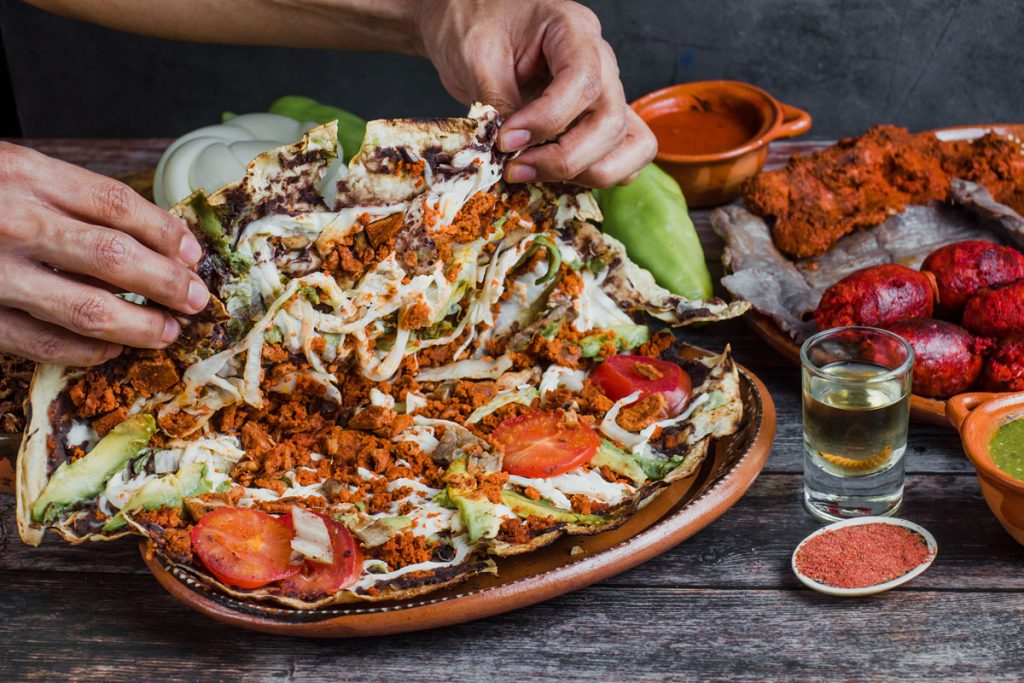
- Tlayudas: Often referred to as Oaxacan pizza, tlayudas are large, thin tortillas that are grilled and topped with a variety of ingredients such as cheese, avocado, meat, and salsa. The dish is popular as street food and is often eaten in the evening with a glass of mezcal.
- Tamales: Oaxacan tamales are made with masa dough filled with various ingredients such as pork, chicken, or mole. These tamales are often wrapped in banana leaves instead of corn husks, which imparts a subtle aroma to the dough.
- Chapulines: One of Oaxaca’s more unusual delicacies is chapulines—roasted grasshoppers that are often eaten as a snack or sprinkled over dishes like tlayudas and tamales. While it may sound strange to some, chapulines are a beloved snack in Oaxaca, prized for their crunchy texture and smoky flavor.
- Quesillo: Oaxacan cheese, also known as quesillo, is a fresh, stringy cheese that is often used in tlayudas, quesadillas, and other traditional dishes. It has a mild flavor and a soft, creamy texture, making it the perfect complement to the region’s rich, spicy dishes.
Mezcal: Oaxaca’s Iconic Spirit
Oaxaca is also known for its production of mezcal, a distilled alcoholic beverage made from the agave plant. Mezcal is often compared to tequila, but it is made using a different production process, which gives it a distinct smoky flavor. Mezcal is typically enjoyed in small sips, often accompanied by slices of orange and sal de gusano (a salty powder made from ground worms). Many visitors to Oaxaca partake in mezcal tastings, where they can learn about the different types of mezcal and the production process that gives the spirit its unique character.
The Appeal of Culinary Tourism in Provence and Oaxaca
Both Provence and Oaxaca have become renowned destinations for culinary tourism, drawing visitors from around the world who are eager to explore their rich food cultures. Food lovers flock to these regions to not only taste their exceptional dishes but to also gain insight into the local culture, history, and culinary traditions that shape each cuisine.
In Provence, the combination of exquisite food and wine, along with the region’s picturesque landscapes, creates an experience that is both sensory and educational. Visitors can join cooking classes, visit local markets, and take wine tours to deepen their appreciation for the ingredients and techniques that define Provencal cuisine.
Similarly, Oaxaca’s food culture attracts tourists who want to understand the deep connections between food and culture. In Oaxaca, visitors can attend cooking classes to learn how to make traditional dishes like mole and tlayudas, or visit indigenous villages to see how ingredients are grown and prepared.
For both regions, food tourism plays a significant role in sustaining local economies, preserving culinary traditions, and promoting cultural exchange. Through food, travelers not only discover new flavors but also gain a deeper appreciation for the history and identity of these remarkable regions.
Conclusion
Whether it’s the Mediterranean flavors of Provence or the bold, complex tastes of Oaxaca, these two regions stand as pillars of culinary excellence. Their distinctive food cultures, shaped by geography, history, and tradition, offer visitors an opportunity to taste the essence of each place. As culinary tourism continues to grow, Provence and Oaxaca will undoubtedly remain top destinations for travelers seeking to explore the world through its food.